Interview Landscape
Patrick Chuprina
In this exclusive interview, we talk with photographer Patrick Chuprina, whose journey from a military reserve paycheck to a celebrated artist is as compelling as his work. He shares how his early fascination with subtle details evolved into a powerful photographic style centered on quiet observation, strong use of color, the beauty of the mundane and effective compositions.
- Tell us a little about your background – what path led you to becoming a photographer, and to doing what you’re doing today?
I’ve been photographing for years, though I didn’t always call it that. It started with noticing things — small details, odd scenes. Growing up I always had pencils, crayons and paper, that progressed to acrylics and oil paints and finally to a Minolta Srt201 that I bought with one of my first military reserve paychecks. Not wanting to go to university took a night shift security guard job and with one of my first paychecks from there I bought an Omega D2V enlarger; I was hooked. From there I started to enter local photo competitions which I won and received the book "Professional Photography." I devoured that book, while the lifestyle it portrayed being surrounded by beautiful models was addictive to a somewhat lonely night time security guard. That led me to two years of photo school at a local community college followed by two wild years at the local art college.
Upon leaving I was lucky enough to find a rare assistant's job and be mentored by an English commercial photographer. The hours were long and if I remember correctly I worked eight months straight without a day off. This led to becoming a full time studio assistant, senior studio assistant and finally a junior photographer. When that big studio closed its doors as most big studios have, I became a freelancer. Through various clients and studios the work was steady and profitable.
But ten years ago the pressure was getting to me,my work seemed stale and I was not happy; so I closed the business and sold most of my studio equipment. I didn't pick up a camera for years.
I now live in Kitchener with my muse, my best friend and wife Audrey, two Italian greyhounds and three cats. Now I photograph for myself and a few select clients. I think my photographic style centers on capturing moments that hint at the human presence without directly showing individuals. Through my lens, I explore the subtle interplay between manmade structures and the natural world, creating images that evoke contemplation and tell stories that you the viewer create.

- What have been one or two favorite recent projects?
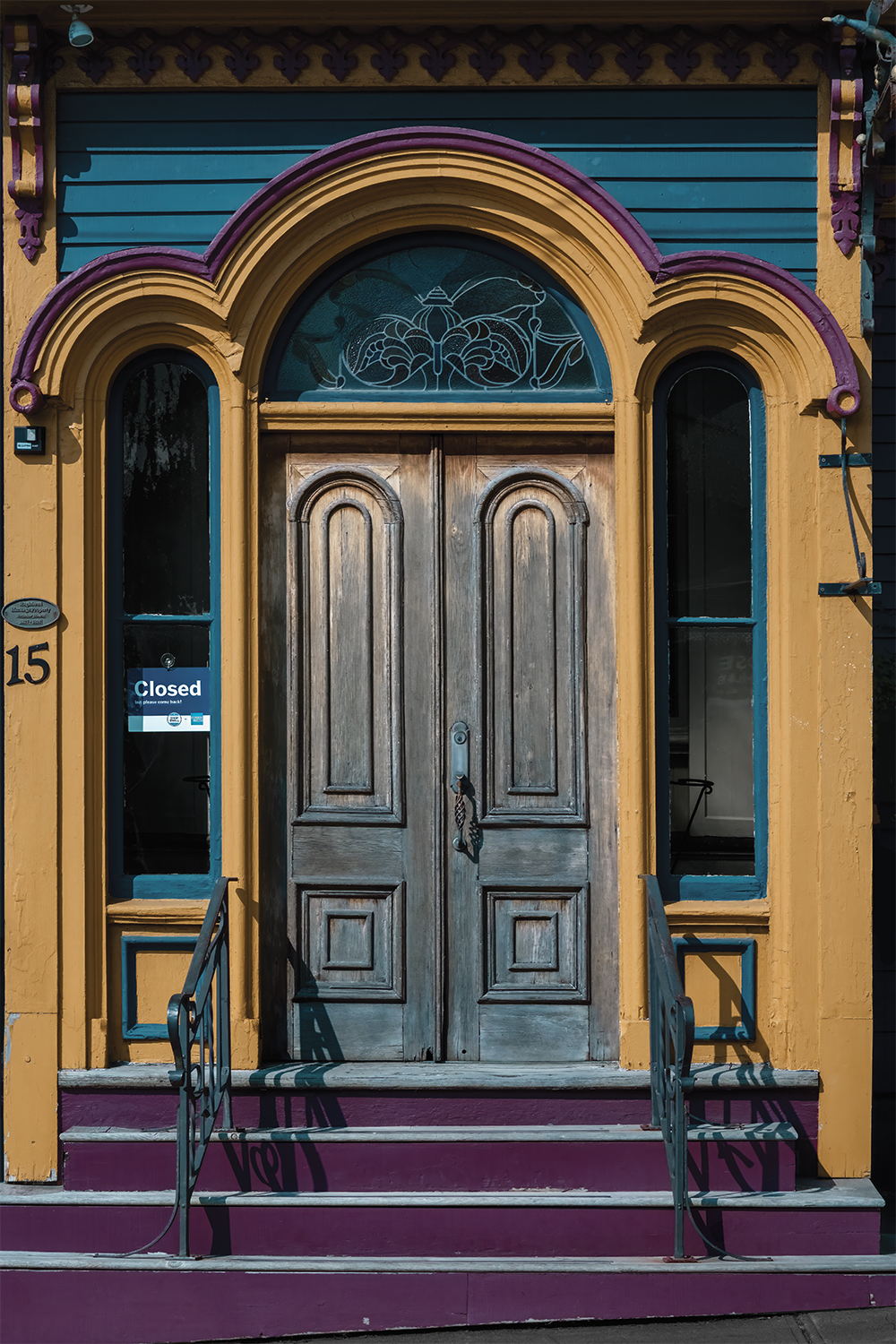
One of my favorite projects is; Coddiwompling Down East: To travel purposefully towards as as-yet-unknown destination; a photographic journey exploring the east coast. In fact another journey down east is occurring late September and October. The other project is "wanderings." I’ve never been drawn to the obviously spectacular. Anyone can point a camera at a dramatic scene and get something eye-catching. What interests me more is the stuff most people pass by without a second thought; the familiar, the worn, the in-between moments. That’s where I feel most at home with my camera. There’s a quiet charge in recognizing something unremarkable;a cracked sidewalk, a dented sign, a moment of strange light on an empty lot and realizing it’s worth photographing. That is my passion, my love of photography. My work is rooted in that kind of seeing. I’m drawn to ordinary places and overlooked fragments of the urban world. I don’t go looking for perfection. I look for feeling, for presence, for those little echoes of time and use. Through framing, timing, and often post-processing in Photoshop, I try to let the mundane carry more weight, more emotion. It’s not about transforming the world into something it’s not; it’s about showing it as it is, and helping others notice what they might’ve missed.

- Can you tell us a bit more about how you approach photography today?
These days, I approach photography less like I’m trying to capture something extraordinary and more like I’m trying to notice what’s already there; the quiet stuff, the overlooked things that most people pass by. I’m drawn to the ordinary, the everyday; parking lots, sidewalks, suburban corners, worn out signage, building facades the odd detail that catches in the periphery. That’s where the soul is, I think. My process is rooted in walking and wandering. I don’t set out with a shot in mind. I just follow curiosity, whatever catches my eye or feels a bit out of place, a bit off. Sometimes it’s a colour, a texture, a gesture of light. Often, it's something I’ve passed dozens of times before but didn’t see until now. That shift; from just looking to really seeing is where the photograph lives for me. I bring the image into Photoshop, not to correct or polish it, but to push it closer to how it felt in the moment. I might manipulate colour, contrast, shadow; whatever the image calls for. I’m not chasing realism. I’m chasing resonance. And more and more, I’m reflecting on what all this adds up to; not just as individual images, but as a body of work. I want the photographs to hold space for ambiguity, memory, and maybe even tenderness. They’re a kind of visual diary; not about what happened, but how it felt to be there and what I was feeling.
- How would you describe your work?
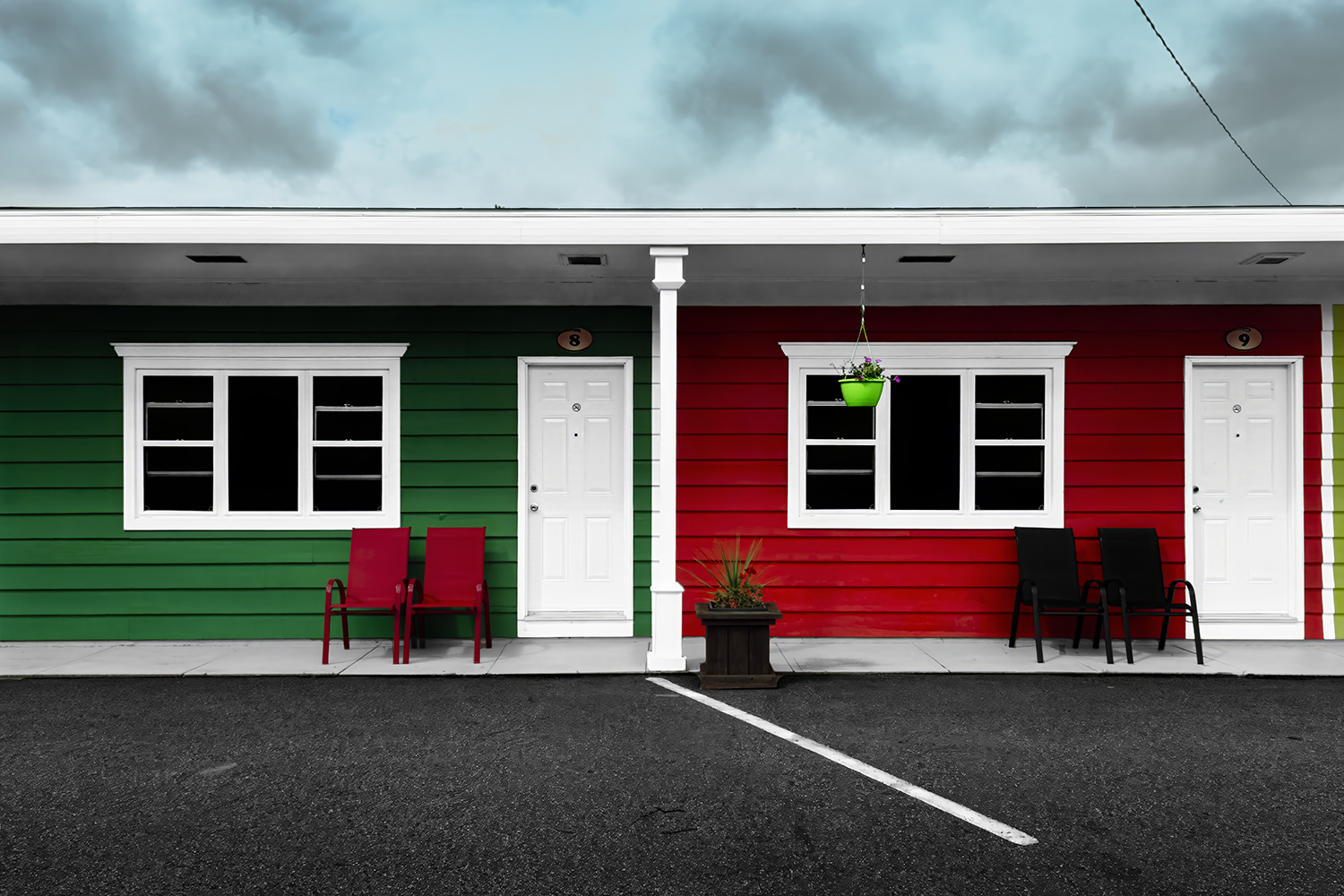
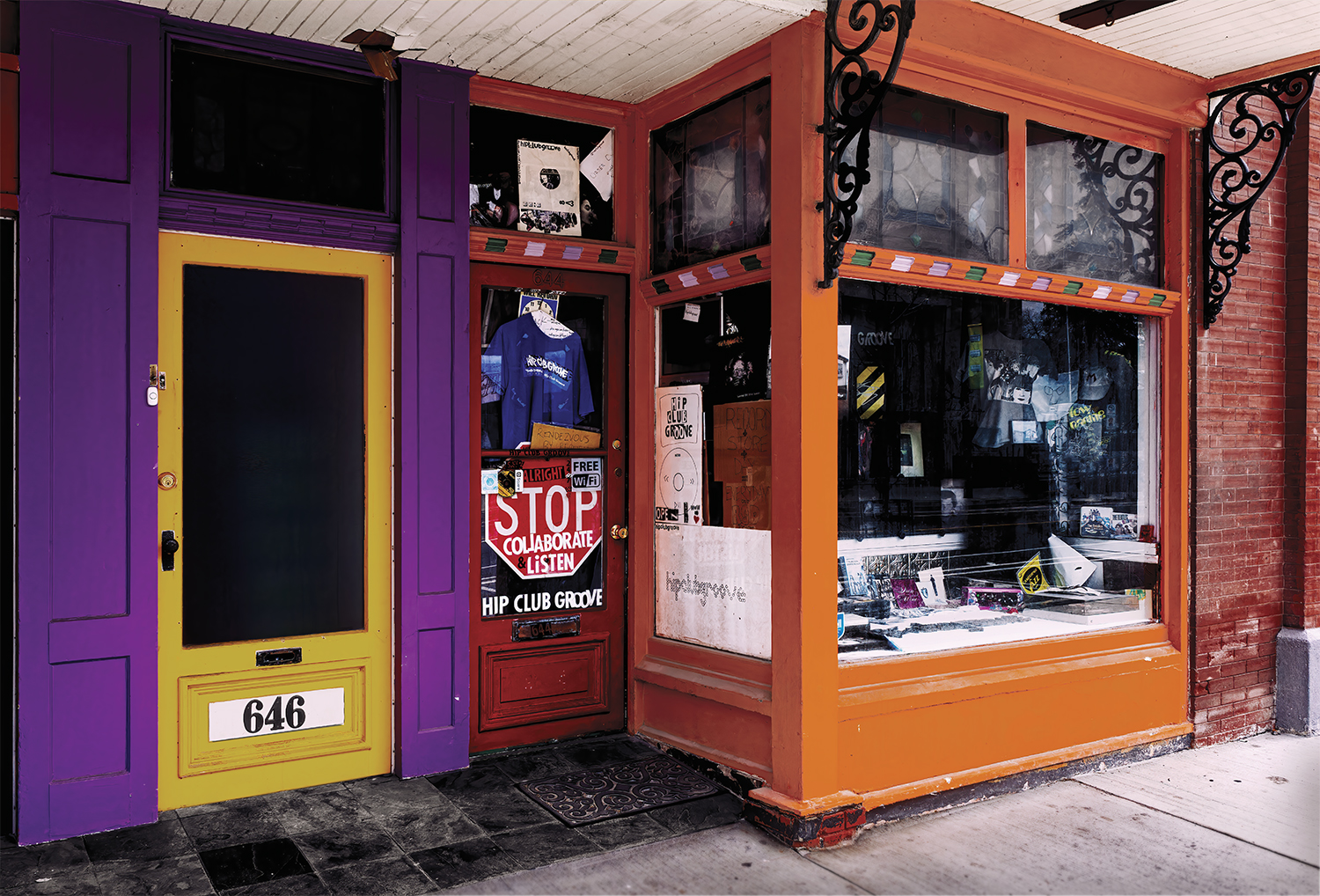
I’d describe my work as observational, quiet, minimal and rooted in the everyday. I’m not out looking for spectacle, I’m more interested in what lingers just beneath the surface of ordinary places: a half-empty parking lot, a storefront, an odd shadow on a wall, a plastic chair facing the wrong way. My photographs come from wandering; from the act of slowing down, paying attention, and responding to things most people overlook.
There’s often a sense of stillness or pause in the images, but also something slightly off-kilter. I’m drawn to the tension between beauty and banality, between the familiar and the strange. I use Photoshop to bring out those subtle emotional cues; not to distort reality, but to shape it into something that feels more like memory than documentation.
In a way, I think of my photographs as fragments. They don’t explain much. But when they’re put together, they start to suggest a larger story; one about place, impermanence, and the act of seeing. I love it when the viewers of my images put the images together with their own thoughts, words, stories.

- Which camera do you use?
Right now a very simple setup; a Fuji XT5 and two lenses. I've had larger kits like a Canon D5 with countless lenses but as I get older I have been simplifying.
- What defines a good picture for you? Or what are you looking for in a picture?
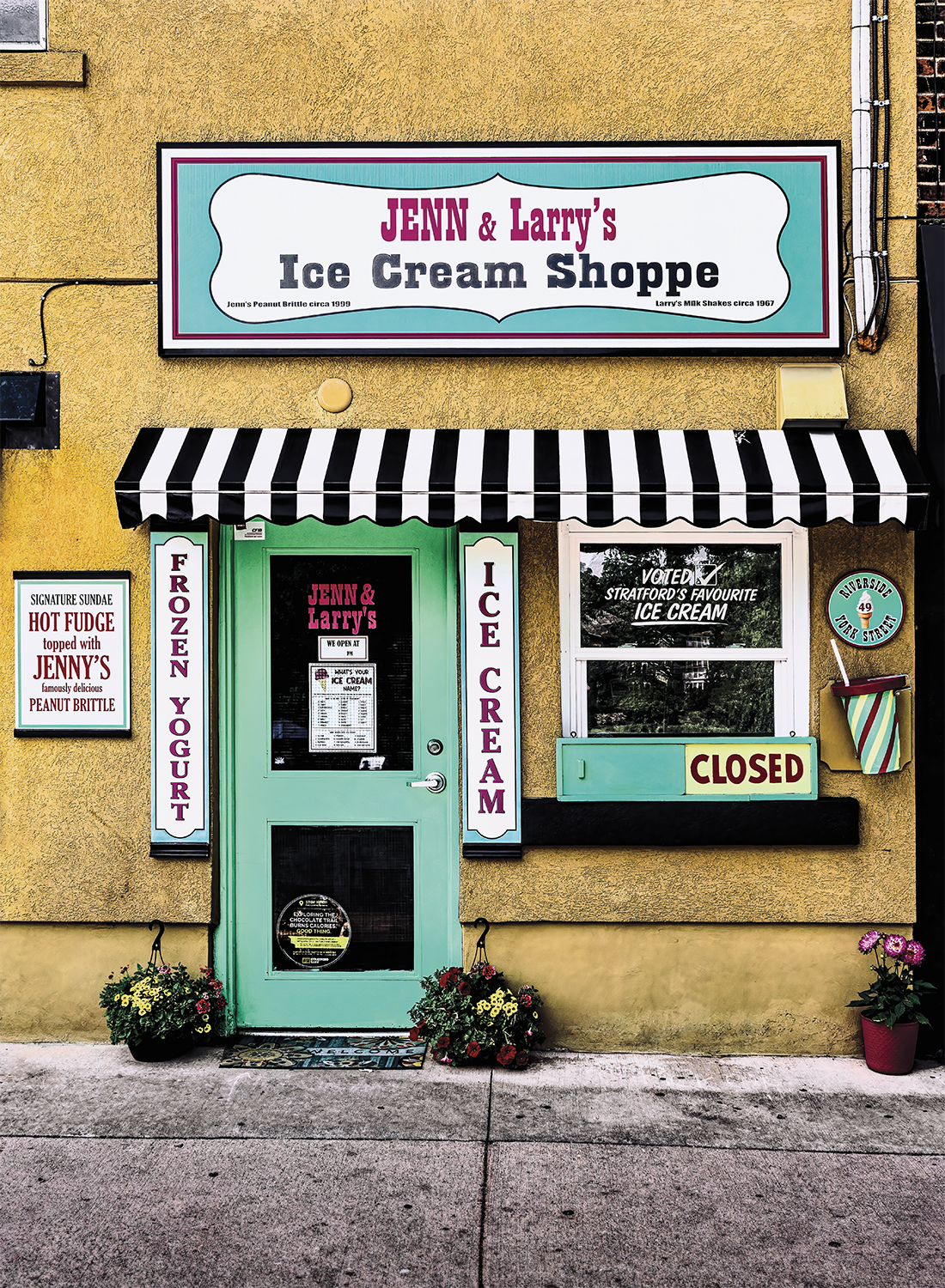
A good picture, for me, is one that feels like something — even if I can’t put that feeling into words. It usually starts with a small instinct, a gut pull. I don’t always know why I’m drawn to a scene in the moment, but if it stops me, if it makes me pause or look twice; that’s usually a very good sign. I’m not chasing the perfect composition or the most beautiful light. I’m looking for something a little off, a little awkward, something that carries tension or quiet resonance. Maybe it’s a weird shadow, a lonely object, a trace of human presence. Maybe it’s just the way two colours sit next to each other. It’s usually something small, but it sticks. I don’t need the viewer to know exactly what they’re looking at. I just want them to feel something. To notice. To stay with the image a little longer than they expected. I want the viewer to create their own stories.

- Which other photographers, designers, artists or creative people are you loving at the moment?
Lately, I’ve been drawn to artists who work with restraint, people who leave space for quiet, ambiguity, and interpretation. Stephen Shore has always been foundational for me, especially his ability to see beauty in the banal, and his clarity of vision without overstatement. William Eggleston, too, for his colour and his unapologetic attention to the ordinary. I’ve also been revisiting Justine Kurland and Alec Soth; there’s something in their wandering approach that resonates. I like how their work feels open-ended, like the story isn’t fully told. And I admire how they navigate that line between documentary and personal fiction.
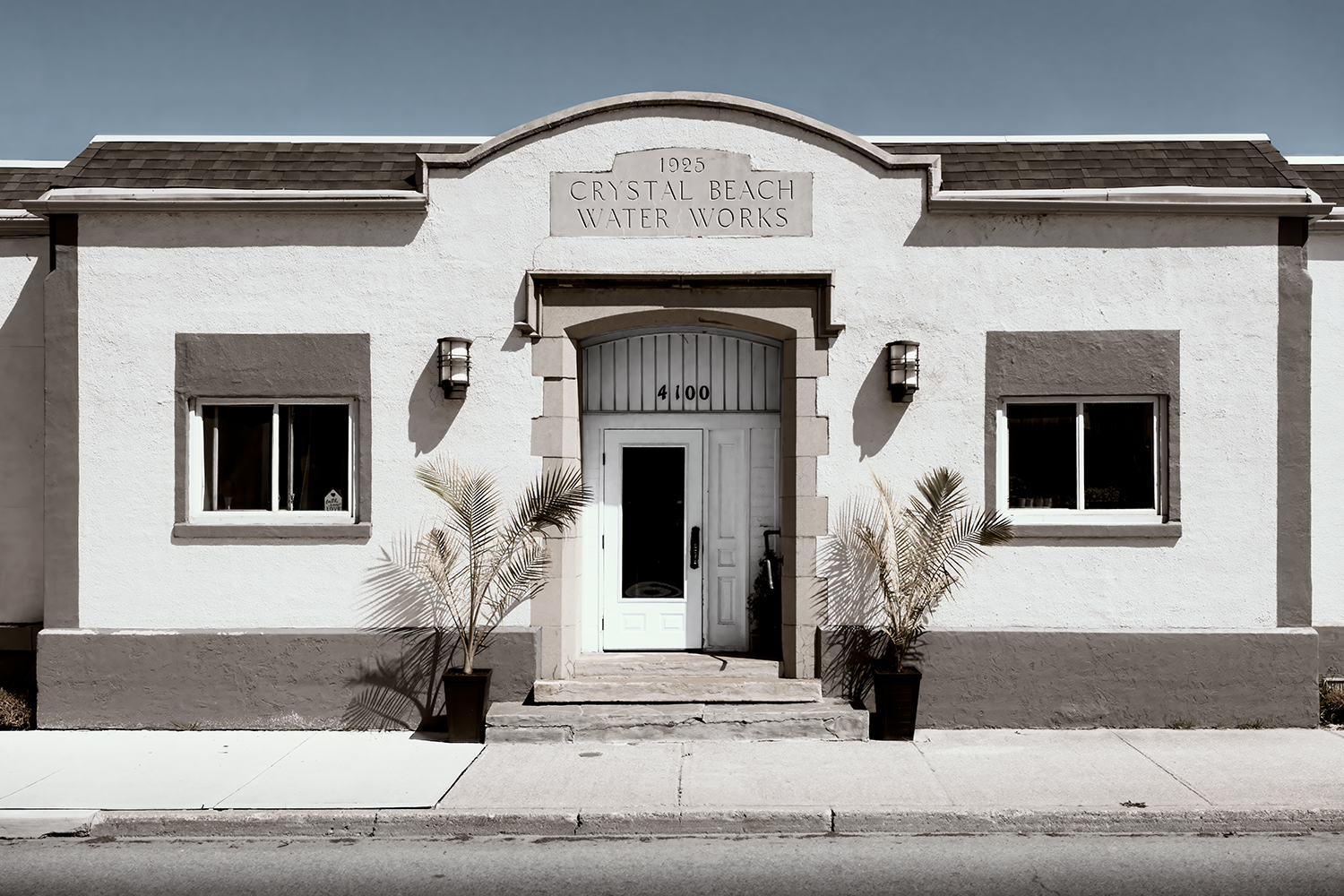
On the design side, I’m interested in minimalism, design that doesn’t shout. I look at photo books and editorial design as much as fine art. People like Irma Boom and the folks behind MACK Books; they make work that’s tactile, intentional, and invites slow reading. Anyone who can take something small and make it feel meaningful. That’s what I’m always trying to do with my photographs; make something quiet feel like it matters
© Pictures by
Patrick Chuprina